

Colonoscopy Screening
Colorectal cancer is one of the most preventable cancers and a colonoscopy screening procedure is your most powerful tool for stopping it before it starts.
At Aspen Valley Health, patients in Aspen and throughout the Western Slope region of Colorado have access to advanced, AI-assisted colonoscopy screening services performed by board-certified surgeons who are with you from your first appointment through every step of your care.
What is a colonoscopy procedure and why does it matter?

A colonoscopy screening is a minimally invasive procedure that allows your surgeon to examine the inner lining of your large intestine using a small, flexible camera called a colonoscope. But it is far more than a simple inspection.
If your surgeon identifies any suspicious growths, known as polyps, during the colonoscopy procedure, they can remove them on the spot and send the tissue to a pathologist for analysis. That analysis determines whether the growth was benign or requires further intervention.
This is what makes a colonoscopy screening so uniquely powerful: it’s a procedure that can detect and treat a potential problem in a single visit. Pre-cancerous polyps that are removed during a colonoscopy procedure cannot evolve into cancer. And when cancer is detected early, treatment outcomes are dramatically better.

Before you reach for an at-home test like Cologuard, make note: At-home colorectal screening tests are convenient, but a positive result (even a false positive) changes how your follow-up colonoscopy is classified by insurance.
Preventive screenings are covered by most plans. Once a positive test is on record, that same colonoscopy screening becomes a diagnostic procedure, meaning your deductible and cost-sharing apply.
For most patients, scheduling a colonoscopy screening directly is the simpler, more economical and more conclusive path forward. Unlike at-home tests, a colonoscopy can detect and remove polyps within one procedure, so it is considered the gold standard.
When is a colonoscopy screening recommended?
There are a few different factors at play to determine when you may need to schedule your colonoscopy screening. The primary ones to consider are your age, your family and genetic history, and any symptoms you’re experiencing that may warrant a colonoscopy procedure.

Age-Based Screening Guidelines
The American Cancer Society now recommends that average-risk adults begin colorectal cancer screening at age 45, a guideline that was updated from the previous recommendation of 50.
Many people are not yet aware of this change. If you are 45 or older and have not yet had a colonoscopy, it is time to schedule one. For most patients with normal results, colonoscopy screenings are then recommended every 10 years.

Family History and Genetic Risk
If a parent, sibling or child has been diagnosed with colorectal cancer or adenomatous polyps, your personal risk is elevated and your colonoscopy screening should begin earlier.
Most guidelines recommend starting 10 years before the age at which your relative was diagnosed, or at age 40, whichever comes first.
Colorectal cancer is increasingly being diagnosed in younger adults, so working with your primary care provider to understand your genetic and hereditary risk is an important step, regardless of your age.
Symptoms That Warrant a Colonoscopy Screening

You do not have to be within the standard screening age range to need a colonoscopy.
If you are experiencing any of the following symptoms, talk to your provider about whether a diagnostic colonoscopy procedure is appropriate:
- Persistent changes in bowel habits lasting more than a few weeks
- Blood in the stool or rectal bleeding
- Unexplained abdominal pain or cramping
- Unintended weight loss
- A feeling that your bowel is not fully emptying
- Chronic diarrhea or constipation
These symptoms are not always cause for alarm, but they deserve a real answer, not a wait-and-see approach. Scheduling a colonoscopy screening with your care team is key to getting those answers.
What conditions can a colonoscopy procedure treat or identify?
Colonoscopies are both a first line of defense in identifying certain conditions, as well as a tool to take care of existing issues.
At most facilities, colonoscopies are performed by gastroenterologists who then refer patients elsewhere for surgical care if they identify an issue. However, at Aspen Valley Health, the same board-certified surgeon who performs your colonoscopy procedure can also provide any necessary surgical follow-up, right here in the Roaring Fork Valley.

Conditions Addressed During the Colonoscopy Procedure
A colonoscopy is not just a screening tool. Depending on what your surgeon finds, further intervention may be necessary. Some conditions that can be addressed directly during the procedure itself include:
- Colon polyp removal and biopsy — Polyps are removed and sent for pathological analysis to determine whether they are benign, pre-cancerous or cancerous.
- Hemorrhoid banding (hemorrhoidectomy) — A non-surgical technique to treat symptomatic hemorrhoids.
- Tissue sampling — Biopsies of suspicious areas of the intestinal lining can be collected for further evaluation.
Conditions Diagnosed and Treated Through Surgical Follow-Up
In cases where a colonoscopy reveals a more complex condition, the care process continues and at Aspen Valley Health, it continues with the same team. Conditions that may require surgical intervention include:
- Colon cancer — surgical treatment, including colon resection, performed at AVH using advanced robotic technology.
- Diseases of the small and large intestine — including diverticulitis and appendicitis.
- Small and large bowel obstruction
- Cecal and sigmoid volvulus
Why choose Aspen Valley Health for your colonoscopy procedure?
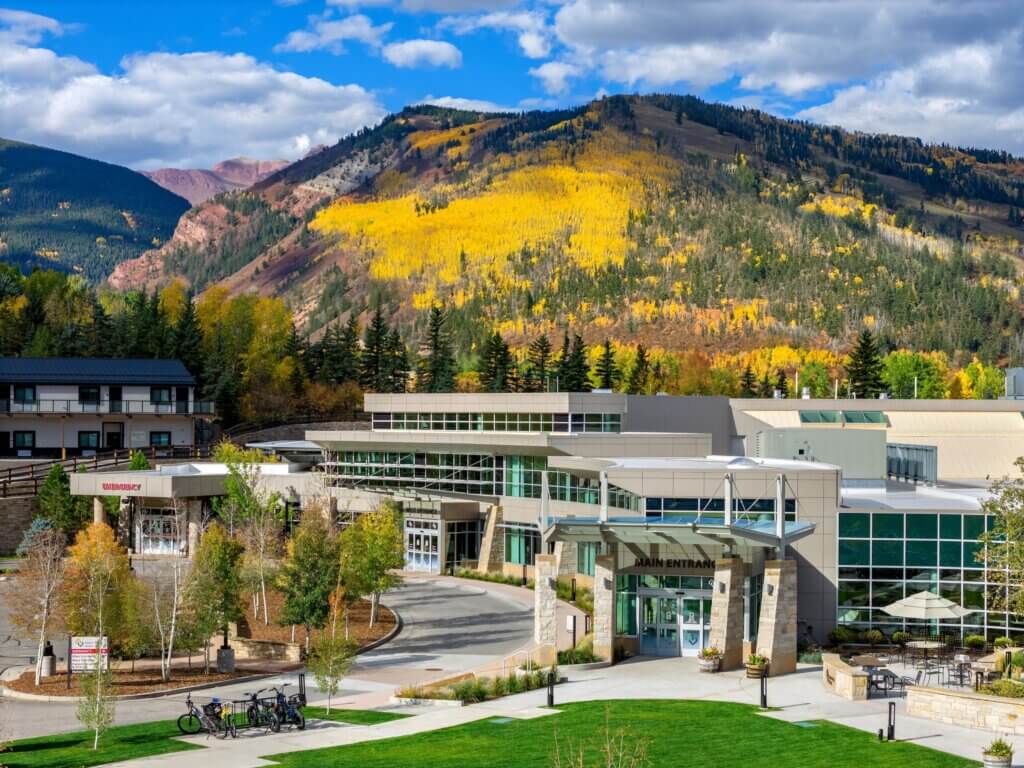
Patients on the Western Slope of Colorado no longer need to travel to Denver or Salt Lake City for exceptional GI care. Here is why Aspen Valley Health is the right choice for your colonoscopy procedure:
AI-Assisted Polyp Detection — Aspen Valley Health uses advanced endoscopic technology with artificial intelligence assistance during colonoscopy procedures. AI-assisted detection has been shown to increase polyp identification rates by up to 10%. This means more potential problems are caught before they become serious.
Board-Certified Surgeons from Start to Finish — Your colonoscopy at Aspen Valley Health is performed by a board-certified surgeon. This distinction matters: the same provider who screens you is also qualified to treat you surgically if intervention is needed. One relationship, one team, one location.
Anesthesiologist-Supervised Sedation — Throughout your procedure, an anesthesiologist or equivalent provider is present and monitoring your care. This level of oversight is not universal. At many facilities, colonoscopy sedation is managed without a dedicated anesthesia provider in the procedure room.
Continuity of Care — Your pre-operative team stays with you before, during and after your colonoscopy procedure. At AVH, care is genuinely unhurried and collaborative. Providers spend real time with patients, which is not the norm in most healthcare settings.
Competitive Colonoscopy Procedure Pricing — At Aspen Valley Health, our colonoscopy procedure pricing is comparable, if not more economical, in comparison with our peers. We believe critical care should be approachable for all.
How to Schedule Your Colonoscopy Procedure at Aspen Valley Health

Most patients come to Aspen Valley Health for a colonoscopy through a referral from their primary care physician or another provider, such as a gastroenterologist. Our team accepts both Colorado and out-of-state referrals.
If you have been advised to schedule a colonoscopy screening or if you are experiencing symptoms that warrant one and aren’t sure where to start, Aspen Valley Health’s Surgical Specialists team is here to help. You can reach us at 970.544.1200.
Note: Our team does require a referral before we can schedule a colonoscopy. This is for your safety, as we’ll need to gather important medical information from you prior to the procedure (e.g., medical history that the anesthesiologist needs to be aware of). Before scheduling, the Prior Authorization Team will contact the clinic and the patient if there are any issues with insurance coverage.
Prep Timeline: What to Expect Before Your Colonoscopy Procedure

Preparation is one of the most important parts of a successful colonoscopy procedure. A well-prepped colon allows your surgeon to see clearly, reduces procedure time and helps ensure nothing is missed.
Here is what the process looks like from the moment you schedule your colonoscopy screening:
GLP-1 agonists (e.g., Ozempic or Wegovy) must be stopped 14 days before your colonoscopy procedure. Contact your prescribing provider if you have questions about this.
Check with your provider about whether and when to pause taking blood thinners, anticoagulants, aspirin, or ibuprofen. Diabetic patients will receive specific guidance on adjusting their medication.
Avoid eating nuts, seeds, corn and popcorn. Begin stocking up on clear liquids for your prep day.
Stay well hydrated. Aim for at least eight glasses of water or other clear liquids throughout the day.
The Day Before Your Colonoscopy Screening
Stop eating solid foods and begin your clear liquid diet. Begin your bowel prep solution as directed by your surgeon.
Follow the instructions provided by your care team, not the package insert or advice from outside sources. Your first dose of Suprep is typically taken at 6 pm the evening before your procedure.
What counts as a clear liquid? Anything you can see through (please avoid purple, red, or blue flavors). Good options include:
- Broth or bouillon (bone broth is a great option to stay satisfied)
- Sports drinks like Gatorade or Pedialyte
- Pulp-free, strained fruit juice
- Coffee or tea without milk or cream
- Carbonated drinks, gelatin and popsicles
The Morning of Your Colonoscopy Screening
Take your second dose of Suprep at least four hours before your scheduled procedure time, finishing your final glass of water no later than two hours before arriving at Aspen Valley Health for your colonoscopy screening.
You may take your regular morning medications with a small sip of water up to two hours before your arrival time. Stay near your phone. Your care team may call to adjust your arrival time if there are any same-day scheduling changes.
What to Expect During Your Colonoscopy Screening
Colonoscopies are quick, comfortable and far less intimidating than most patients expect. As Dr. Alexandra Kovar, one of AVH’s board-certified surgical specialists, puts it: “the benefits of this procedure far outweigh any risk or discomfort involved.”
You will be given sedation before the colonoscopy procedure begins. You will not be under general anesthesia, but you will be fully comfortable and unaware during the procedure.
An anesthesiologist or equivalent provider is present throughout to monitor your sedation and ensure your safety. The level of dedicated anesthesia oversight that Aspen Valley Health provides is not standard at many medical facilities.
Once you are sedated, your surgeon will gently guide the colonoscope through your colon to examine the lining in detail. If any polyps or abnormal tissue are identified, they will typically be removed during the same appointment and sent to a pathologist for analysis.
The colonoscopy procedure generally takes less than an hour from start to finish, though the total time at the hospital (including prep, sedation and recovery) is closer to three hours.
What to Expect After Your Colonoscopy Screening
After your colonoscopy procedure, you will spend time in a recovery area while the sedation wears off. Most patients feel ready to go home within an hour of the procedure ending, though you will need a designated adult driver.
You cannot ride a bus, walk home or take a taxi. Plan for your full day to be set aside, as you should not drive for 24 hours after the colonoscopy screening.
How can you expect to feel after your colonoscopy procedure?
It is completely normal to feel mildly bloated or gassy after a colonoscopy screening, as your body processes the air introduced during the procedure. This typically resolves within a few hours. Most patients return to their normal diet and routine the following day.
When should you call your care team about concerns?
While complications from colonoscopy are uncommon, contact Aspen Valley Health if you experience any of the following after your procedure:
- Heavy rectal bleeding that does not slow or stop
- Severe abdominal pain or cramping
- Fever above 100.4°F
- Persistent nausea or vomiting
- A firm or distended abdomen
If you have questions or concerns in the days following your procedure, please reach out to your care team.
Your AVH pre- and post-operative team follows you from your first appointment through your recovery, because continuity of care is not just a phrase here. It is how we practice medicine.
Ready to schedule your colonoscopy procedure in Aspen?

Whether you are due for a routine colonoscopy screening or you have been putting off a conversation about symptoms you have noticed, the Aspen Valley Health team is here and ready to see you.
Call 970.544.1200
Our promise, For You. For Life., means providing the care and resources that will help you flourish during every season of life. Read our blog here and discover your healthy journey.