

Choosing where to spend your retirement years is one of life’s most personal (and important) decisions. When considering what to look for in a retirement community, it’s about more than beautiful surroundings or convenient amenities. The right senior living community should nurture your independence, support your health and foster genuine connection, creating a place where you can truly thrive.
Sandy, a resident of Whitcomb Terrace, the only not-for-profit senior living community in the Roaring Fork Valley, is someone who took planning for retirement very seriously prepping in advance of the need to move to a senior living community.
We asked her about her journey and what factors she considered when looking for a retirement community to help her maintain her quality of life during her senior years and truly thrive. As Sandy put it, her goal was to genuinely, “retire in a state of bliss.”
How to Know it’s Time to Move to a Retirement Community or Senior Living Residence

There’s no denying it: for many seniors, the concept of independence is at the heart of the big life question of whether and when it’s time to move to a retirement community.
Understanding what to look for in a retirement community can make that decision easier, particularly for those who value both independence and support.
Many seniors have spent the better part of their adult lives living with only one other person, or even alone. But the idea that choosing a retirement community means giving up your independent lifestyle during your senior years is a myth—just ask Sandy.
“I’ve been very independent my whole adult life, but I’d had a few health scares that made me start thinking about having more support. I had to ask myself, ‘Where do I want to be when I start to need assistance?’”
It can be difficult to determine the exact moment one needs to move to a retirement community or senior living residence.
For those beginning to explore how to choose the right senior living community, there are a few key factors and guidelines to consider, especially if you’re someone who could benefit from the peace of mind that comes with knowing care and connection are close at hand.
Health and Safety Concerns
When evaluating what to look for in a retirement community, health concerns should be top of mind. If health or mobility issues are making you feel unsafe or resulting in difficult daily tasks, choosing a retirement community or senior living residence may be the right call.
Warning signs for seniors to watch for:
- Falls or accidents
- Medication management, or struggling to remember to take prescriptions
- Noticeable weight loss or other changes in physical health
- Difficulty with personal hygiene
- Worsening chronic conditions
Challenges with Daily Living
Sandy advises fellow seniors that it’s important to begin determining what to look for in a retirement community, before, rather than when, it becomes difficult or overwhelming to address daily tasks. Choosing the right senior living residence or community in advance of needing it is key.
Warning signs for seniors to watch for:
- Trouble with household responsibilities
- Leaving the stove on or forgetting to pay bills
- Difficulty driving
- Becoming increasingly reliant on family or friends for basic needs
Cognitive Changes
When evaluating what to look for in a retirement community, it’s critical to consider any cognitive changes you’re experiencing, as that will determine what level of care you’ll want to seek.
Warning signs for seniors to watch for:
- Missing appointments or becoming confused about time
- Repeatedly misplacing items
- Getting lost in familiar places
- Notable changes in personality or mood
Feeling Lonely or Socially Isolated
When feeling or being alone becomes overwhelming to the point of affecting physical and mental health, the tight-knit community that comes with moving to a senior living residence can make all the difference.
Warning signs for seniors to watch for:
- Increased anxiety or depression
- Withdrawing from daily life
- Spending most days alone
- Showing less interest in social activities
Financial and Logistical Considerations
If maintaining your own home is no longer possible or enjoyable, what you’ll want to look for in a retirement community or senior living residence is a place that can support you through daily logistics that will become increasingly important.
Warning signs for seniors to watch for:
- Rising home maintenance costs
- Difficulty managing bills or household responsibilities
- The need to make significant changes to the home to make it livable, such as adding ramps, handles or railings
Quality of Life and Peace of Mind
Ensure you control the timing of your transition to a retirement or senior living community, moving when it will enhance your quality of life and not just be a reaction to crisis or deteriorating health.
You can ask yourself:
- Would life be easier with help nearby?
- Would I feel more comfortable or benefit from 24/7 care during my senior years?
- Would I enjoy more social opportunities and activities?
Making the transition to a retirement community or senior living residence a smooth one requires some consideration before it becomes a necessity.
Sandy says, “The biggest mistake I see with seniors around town is them feeling like they’re just not ready for that yet. And I say to them, ‘How will you know?’ If you wait too long, you may not be able to get into Whitcomb Terrace or your desired senior living residence. These aren’t bed and breakfasts. You can’t check in at the last minute.”
Sandy did her research on what to look for in a retirement community before she needed it. And she got herself on the Whitcomb Terrace wait list, because taking chances on her retirement wasn’t something she intended to do.
She tells us, “I leapt at the chance when I got the news. I’ve lived in Aspen since 1968. Despite spending plenty of time abroad, I really felt like this was home for me. All of my friends are here. I love the outdoors. I’ve been an athlete most of my life. So when I heard a room at Whitcomb Terrace was available, it just spoke to me, ‘Time to come home.’”
Does choosing to live in a retirement or senior living community mean giving up your independence?

To put it simply, it absolutely doesn’t have to. As far as sacrificing one’s independence during their senior years, Sandy has experienced the opposite. Being a resident at Whitcomb Terrace has afforded her a freedom and peace of mind she didn’t necessarily enjoy when she lived alone.
“Once you retire, you have a new job, and that job is taking the best possible care of yourself. If I take care of myself, I have energy to take care of others. But if I fall, I become dependent, and as someone who has been independent her whole life, that’s a hard pill to swallow.”
And for those who are wondering, being a resident at Whitcomb Terrace has done anything but slow Sandy down during her retirement. “I play tennis. I play golf. I drive my own car. I cross country ski out my back door. I downhill ski at Aspen and Snowmass.”
The vivacious 87-year old still gets a ski pass every year. When you ask her what she loves about Whitcomb Terrace and the benefits of living in the Roaring Fork Valley, she doesn’t hold back. “I like hiking, biking, walking and the change of seasons. I love the snow. Where else can you find those things that are as good as they are here?”
She comes and goes as she pleases. She creates her own agenda. She reads the morning paper, and then decides which activities will be a good fit for her day.
Sandy is proof that choosing a retirement community doesn’t mean giving up your independence in your senior years; it can actually expand it. She’s able to pursue her passions while still being fully supported at Whitcomb Terrace, where a dedicated staff helps with daily responsibilities, hygiene and medical needs.
For anyone considering what to look for in a retirement community, Sandy’s experience shows that the best environments empower residents to live life on their own terms. Knowing how to choose the right senior living community that balances independence with care can make all the difference.
The community at Whitcomb Terrace is one of inclusivity, where resident seniors can engage with as much social activity as they’d like and lean on the amenities and services as much as they need to.
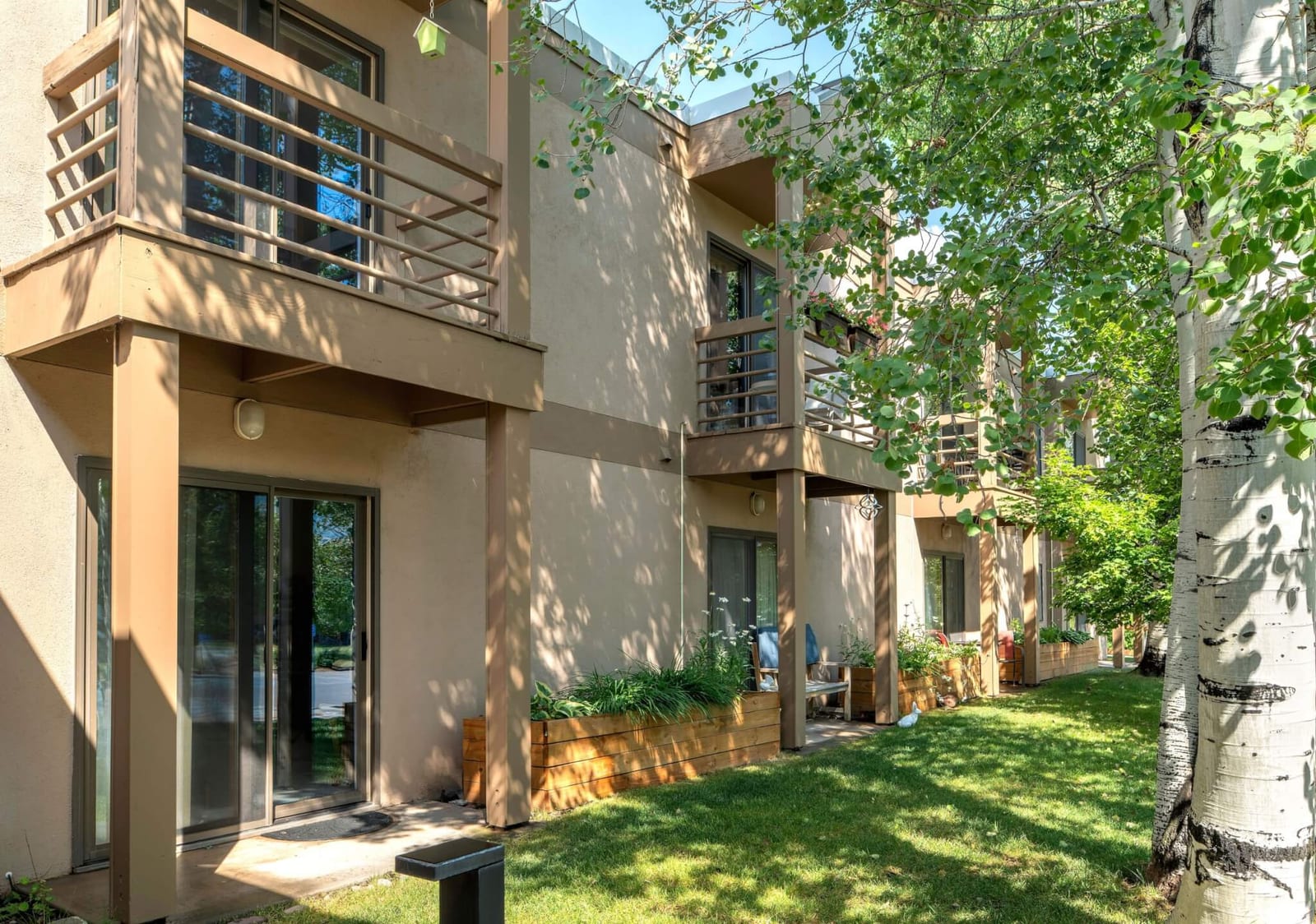
Residents pay a single peace-of-mind fee, which is virtually all-inclusive. Amenities include:
- All rooms come with basic cable
- All utilities except a landline telephone
- Comfortably furnished living room
- Courtyards, gardens and walking paths
- Gardening areas
- A large terrace with tables and umbrellas
- Light-filled activities and games area
- Library and media room
- Pets are welcome
- Private patios or balconies
- Private, restaurant-style dining room
- WiFi throughout the residence
According to Sandy, it’s a place where staff and other senior residents feel more like family. “There are only 15 residents here. We all sit down together for three meals a day, and I really look forward to that. Even when I’m not hungry, I wouldn’t miss a meal for anything because I so enjoy having those conversations with the other residents.”
For Sandy, when evaluating what to look for in a retirement residence, she knew the community of seniors she’d be surrounded with was critical. “You’re living with an age-range of people with all sorts of personalities. Some people are social and some are not. Personally, I love sitting at the social table, joking with my friends and laughing.”
The Core Factors—what to Look for in a Retirement Community

When you’re looking for the right retirement community, there are a variety of factors to consider. Most importantly, try to find a senior living community that supports dignity, connection and independence; a place that feels like home.
1. Location and Environment of the Retirement Community
You’ll want to look for a retirement community that is conveniently located, either near friends, family, doctors or other special attributes or landmarks.
2. Care and Medical Support Services
Depending on how much care you require, it’s important to look for a retirement community that supports your particular health needs. Inquire about the levels of care available, the staff-to-senior ratio, access to medical care and the emergency response system.
For Sandy, Whitcomb Terrace provides an ideal level of medical support, making her feel safe and comfortable when an emergency arises. The senior living residence provides emergency phones in rooms and bathrooms as well as an emergency necklace for each resident.
“One night, I had to use the button. It wasn’t 10 seconds before someone was in my room to help. Then, 10 minutes after that, a paramedic was here to take me to the hospital. It was so nice to know I have that available to me when I need it. That’s why I live here. I’m capable, in most ways, to live anywhere. But in those moments when there is medical discomfort or a medical emergency, it’s good to know I have the help I need immediately when I need it.”
3. Lifestyle, Amenities and Activities
Senior living should be about just that: living. Looking for the right retirement community that fits with your lifestyle, passions and goals is important. Consider dining options, recreation opportunities, social life and transportation.
4. Visitor Policies at the Retirement Community
When evaluating what to look for in a retirement community, the visitor policy is a crucial factor that directly impacts your quality of life and family connections. Before committing to any senior living community, ask detailed questions about visiting hours, overnight guest policies and whether family members can join you for meals.
Some communities maintain open-door policies that welcome visitors anytime, while others impose restrictions that could prevent spontaneous visits from grandchildren or evening gatherings with loved ones. Understanding these rules up front ensures your new home supports rather than restricts your most important relationships.
How to choose the right senior living community involves matching policies to your personal priorities, and visitor access should rank high on that list. Communities with flexible visitor policies demonstrate trust in their seniors and a resident-centered approach.
Sandy encourages seniors evaluating retirement communities and senior living residences to ask current residents about their experiences during their tour. They’ll provide honest insight into whether written rules match daily practice.
5. Culture, Community and Values
Sandy advises people looking for the right retirement community for them to do their research. “Visit other facilities. Talk with residents in different places and see what condition they’re in. Are they genuinely engaged? Are they happy and stimulated? Are they getting out and interacting with their community? Are they doing things to take care of their own health?”
Choosing the right senior living senior living community can be a process. This is where you’ll spend your golden years, and it’s critical that it feels right to you.
6. Cost and Contract Structure at the Senior Living Community
Whitcomb Terrace keeps their pricing structure easy—a single monthly payment covers nearly all living expenses, meaning no hidden fees. But this isn’t always the case for many retirement communities, so it’s important to understand the costs and contract differences between senior living options.
When evaluating what to look for in a retirement community, make sure to ask about fee types, such as monthly rent or a buy-in model, what’s included in the cost and what the refund or exit policies are if you decide to leave the senior living residence.
7. Safety, Cleanliness and Reputation of the Facility
In addition to visiting a facility to ensure it feels safe and clean, it’s important to do your homework. When exploring what to look for, take time to do some online research—read reviews and ratings, and look for inspection records or other licensing and compliance reports.
As you’re choosing a retirement community, don’t hesitate to ask questions. Talk with staff about facility security, staff credentials, background checks and ongoing training. These details can make all the difference when you’re learning how to choose the right senior living community and want to feel confident in your decision.
8. Flexibility and Future Planning
When interviewing potential retirement communities, it’s important to know what to look for in a community that will truly meet your needs now and in the future. A key part of choosing a retirement community is understanding how it supports residents through every season of life, from independent living to more advanced levels of care when needed.
Ask about how senior residents transition from independent living to more robust support, such as memory care or skilled on-site nursing. And as you evaluate how to choose the right senior living community, be sure to discuss how pricing and services adjust as you move from one level of care to the next.
Your Senior Living Community Should Feel Like Home

Once you’ve done your research on what to look for in a retirement community and determined if a senior living residence is right for you or your loved one, it’s important to schedule a visit to facilities to see if they feel like the right fit.
Sandy has definitely found hers at Whitcomb Terrace. “Sometimes, you’d think we were 16-years old in high school given how we joke with each other, but that’s what keeps things going. I belly laugh at that table. After living alone for so many years, what a treat.”
To learn more about the senior living possibilities, services and amenities at Whitcomb Terrace, schedule your visit today.